
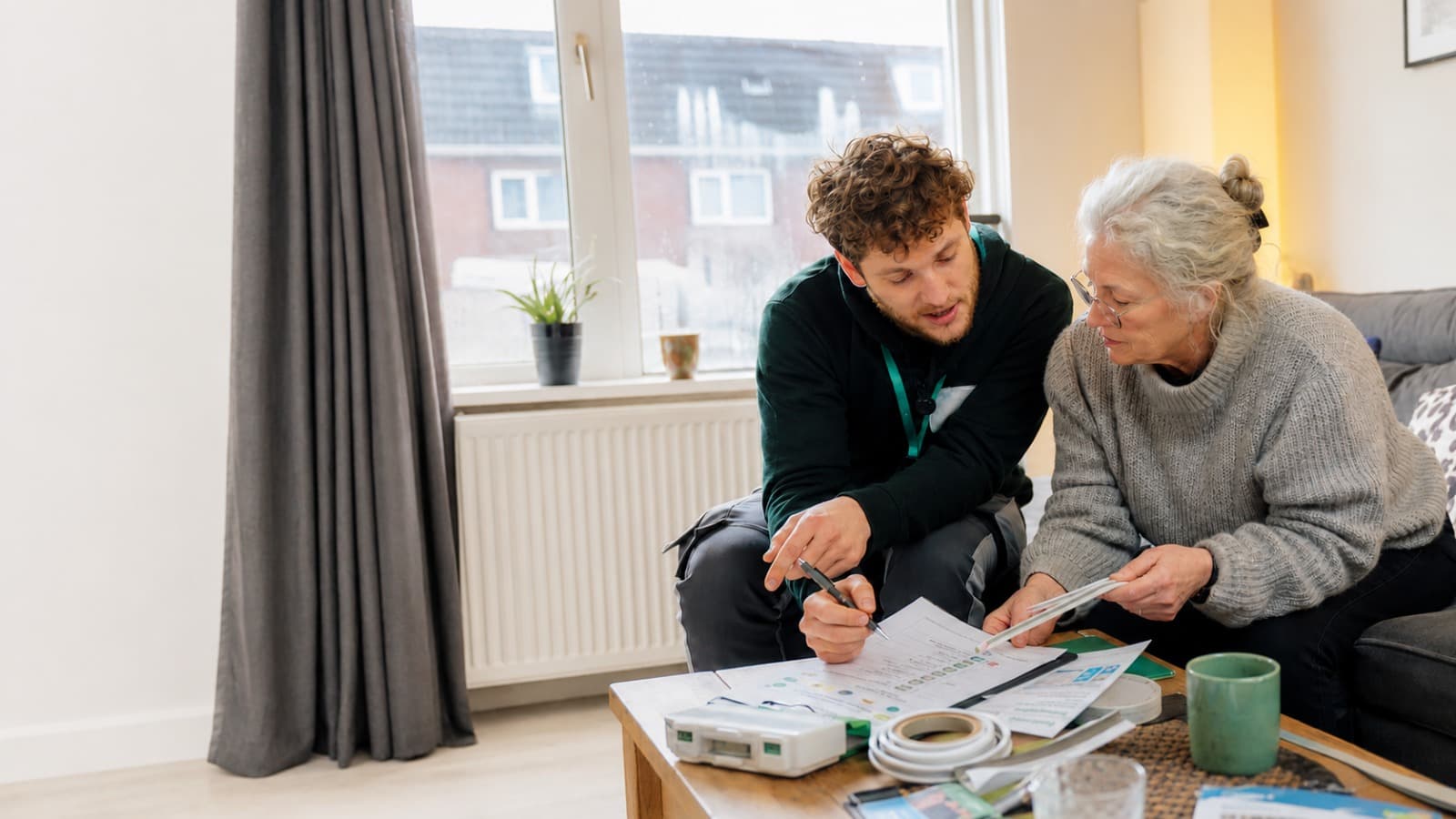
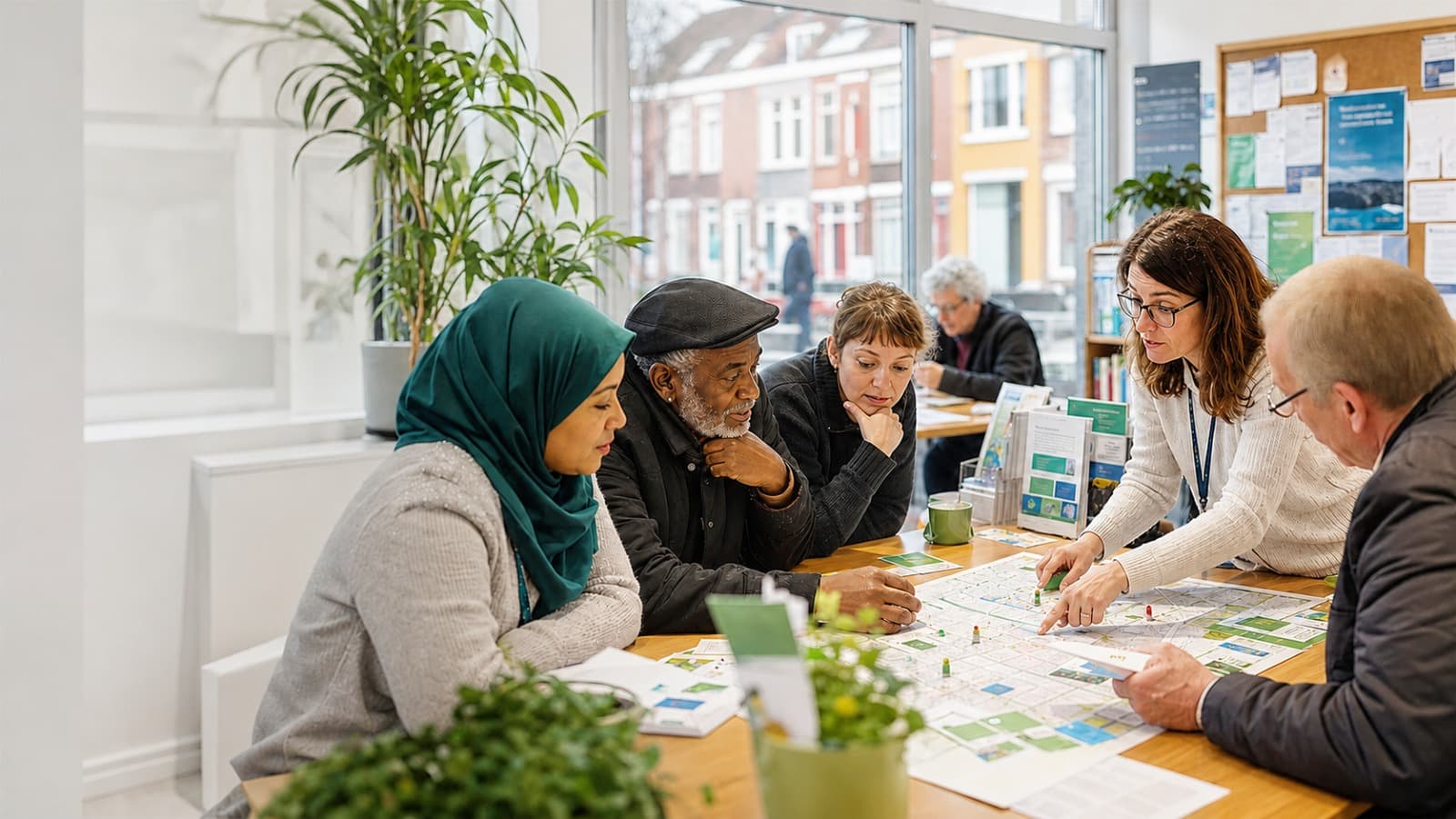


KrachtKring organizes collaboration, removes systemic barriers and strengthens local implementation capacity so support can move from policy to households.

Discover our approach
System challenge

Energy poverty is not one problem.

The blueprint frames energy poverty as a connected social, technical and organizational challenge. The organizational layer is central because available knowledge and resources do not automatically reach households.

Social

Reaching households

Energy poverty is shaped by affordability, housing quality, low trust, bill complexity, pride and shame. Local relationships matter.

Technical

Turning measures into practical pathways

Technical solutions and home measures exist, but they need to fit local homes, resident realities and implementation capacity.

Organizational

Making the system coherent

The central challenge is connecting mandates, funding, projects and responsibilities so support can move from policy to households.

Matchmaker model

The connector is the operating model.

KrachtKring contributes by organizing coherence between projects, organizations, policy, funding and households behind the front door.

01

Identify bottlenecks

Use baseline evidence and partner experience to see where initiatives, data, trust or implementation pathways are stuck.

02

Connect actors

Bring municipalities, businesses, community organizations, energy cooperatives and researchers into a shared operating rhythm.

03

Translate to action

Turn policy, funding and technical possibilities into practical activities that can reach households behind the front door.

04

Monitor and adjust

Feed outputs, outcomes and partner reflection into the Impact Matrix so the blueprint improves before wider scaling.

Current focus

What the ecosystem is learning now.

A public-facing view of the themes, workshops and evidence questions shaping the launch.

Latest activities

Momentum across the region.

Workshops, pilot preparation and learning outputs show the programme is active, structured and locally grounded.

Baseline and monitoring

A starting point for learning and scaling.

The baseline, indicators and monitoring model give partners a shared starting point for learning, coordination and scaling decisions.

Current phase1

Phase 1 focuses on baseline assessment, assumptions, KPI selection and blueprint design.

Google Impact Blueprint · January 2026
Regional baseline~8%

Approximate share of households experiencing energy poverty in Het Hogeland and Eemsdelta.

Baseline assessment · January 2026
Starting region2

The blueprint starts in Het Hogeland and Eemsdelta, where urgency is high.

Google Impact Blueprint · January 2026
Monitoring tracks2

Impact monitoring and reflexive monitoring work together to support learning and accountability.

KrachtKring monitoring model · Phase 1 design
Partner ecosystem

Collaboration made visible.

KrachtKring makes the different contributions in the ecosystem visible, from local trust and housing knowledge to research, tools and public coordination.

Municipality explorer

Compare local context before scaling.

The explorer connects the first municipalities, regional baseline work and the wider blueprint so partners can see where learning is emerging.

Northern Groningen baseline region
Het HogelandEemsdeltaNorthern Groningen
Explorer preview

From municipality signals to shared decisions.

Each municipality view links local context, project activity and monitoring status so partners can compare progress and learning across the region.

Impact Matrix

From activities to system learning.

The blueprint combines impact monitoring with reflexive monitoring, so outputs, outcomes and partner reflection can shape future project choices.

01

Inputs

People, resources, time, local trust and partner capacity enter the system.

02

Activities

Impact and reflexive monitoring translate learning into better project selection and coordination.

03

Outputs

Impact and reflexive monitoring translate learning into better project selection and coordination.

04

Outcomes

Impact and reflexive monitoring translate learning into better project selection and coordination.

05

System indicators

Impact and reflexive monitoring translate learning into better project selection and coordination.

06

Reflection

Impact and reflexive monitoring translate learning into better project selection and coordination.

07

Blueprint scaling

Impact and reflexive monitoring translate learning into better project selection and coordination.

Dashboard preview

The dashboard supports the Impact Matrix.

Explore baseline indicators, project records and learning signals that help the ecosystem adjust over time.

Baseline indicators

Reference starting point

Monitoring tracks

Impact and reflexive learning

Methodology

Attribution matters

KrachtKring can track its working method directly while treating system-level impact as shared ecosystem change.

Open Impact Dashboard
Research and learning

The blueprint is a learning product.

Reports, baseline notes and reflexive monitoring outputs turn KrachtKring into a reusable approach, not only a collection of projects.

Join the ecosystem

Turn local energy interventions into measurable social impact.

KrachtKring is designed for municipalities, partner organisations, researchers and community groups working on energy poverty.